
 By
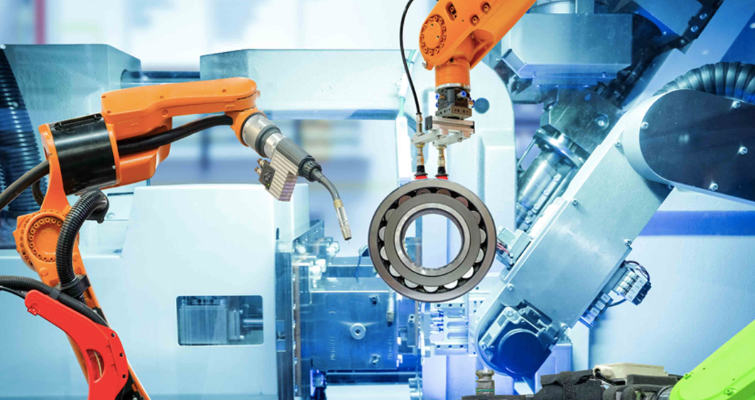
The history of human civilization is fundamentally defined by materials. From the Stone Age to the Bronze Age, and eventually to the Silicon Age, every major leap forward in human capability has relied on the mastery of new substances. In the modern industrial landscape, a similar revolution is taking place quietly. Traditional manufacturing materials like standard steel, aluminum, and basic plastics are reaching their physical limits. To build faster transportation, more efficient energy systems, and resilient infrastructure, industries are turning to advanced materials.
Advanced materials are engineered substances that possess superior performance characteristics compared to conventional materials. These characteristics include exceptional strength-to-weight ratios, high electrical conductivity, extreme heat resistance, or self-healing properties. By incorporating these materials into production pipelines, aerospace, automotive, energy, and electronics sectors are unlocking levels of efficiency and innovation that were once mathematically impossible.
Redefining Aerospace and Automotive Engineering
The transportation sector is caught in a constant battle against gravity, friction, and inertia. In both aerospace and automotive manufacturing, the primary objective is weight reduction without compromising passenger safety. Advanced materials have become the primary weapon in this optimization effort.
Carbon fiber reinforced polymers have transformed aircraft design. Traditional aircraft were constructed predominantly of aluminum, which is prone to fatigue and corrosion over decades of flight cycles. Modern commercial airliners utilize carbon fiber composites for over half of their airframe structures. These composites are significantly lighter than aluminum while offering comparable tensile strength. This weight reduction drastically cuts fuel consumption and lowers carbon emissions, directly improving airline profit margins.
In the automotive world, advanced high-strength steels and lightweight magnesium alloys are reshaping vehicle architectures. As the industry transitions toward electric vehicles, weight management has become even more critical. Electric vehicle batteries are inherently heavy. To maximize the driving range of a single battery charge, automakers must shave weight from the rest of the vehicle chassis. Utilizing advanced lightweight alloys allows manufacturers to build lighter frames that offset battery weight, making electric transportation more viable for everyday consumers.
Revolutionizing Electronics via Semiconductor Nanomaterials
The electronics industry thrives on miniaturization and speed. For decades, standard silicon processing has successfully powered the expansion of computers and smartphones. However, silicon is reaching its atomic limit. As transistors shrink to the width of just a few atoms, silicon exhibits electrical leakage and generates extreme heat, threatening to halt technological progress.
To circumvent this bottleneck, researchers and manufacturers are adopting advanced nanomaterials.
-
Graphene: A single layer of carbon atoms arranged in a hexagonal lattice. It is an extraordinary conductor of heat and electricity, while being incredibly strong and flexible.
-
Gallium Nitride: An advanced semiconductor material that handles much higher voltages and temperatures than traditional silicon, allowing power adapters to become smaller and more efficient.
-
Transition Metal Dichalcogenides: Two-dimensional materials that offer unique optical and electronic properties, paving the way for ultra-thin, flexible electronics.
These advanced materials enable the production of faster microchips, more efficient power grids, and flexible consumer displays. By replacing or augmenting silicon, these substances ensure that computing power can continue to scale down in size while scaling up in performance.
Transforming Clean Energy Infrastructure
The global transition toward renewable energy sources relies heavily on the physical durability and efficiency of infrastructure. Solar panels, wind turbines, and energy storage batteries are only as good as the materials used to construct them. Advanced materials are directly responsible for recent breakthroughs in clean energy collection and storage.
Wind energy provides an excellent example. To capture more wind and generate more electricity, wind turbine blades must be incredibly long. However, as a blade increases in length, gravity exerts immense stress on its base, causing traditional fiberglass blades to bend or crack. By integrating advanced carbon fiber composites and nano-engineered resins, manufacturers can produce longer, stiffer, and lighter blades. These advanced blades capture lower wind speeds effectively and withstand turbulent ocean environments, making offshore wind farms far more economically viable.
Similarly, the solar industry is shifting toward perovskite materials. Traditional solar panels rely on silicon cells, which have a theoretical efficiency cap. Perovskites are a class of advanced synthetic materials that absorb light far more efficiently than silicon. When layered on top of traditional silicon cells, these tandem solar cells capture a wider spectrum of sunlight, promising a massive leap in power generation without expanding the physical footprint of solar farms.
Upgrading Heavy Industry through Smart Coatings and Metamaterials
Industrial manufacturing equipment operates under punishing conditions, including extreme friction, corrosive chemicals, and scorching temperatures. Standard metal components wear down quickly, leading to expensive factory shutdowns and maintenance routines. Advanced smart coatings are resolving these industrial bottlenecks.
Thermal barrier coatings made of advanced ceramics protect the interior components of gas turbines and heavy engines. These coatings act as an atomic shield, allowing machines to operate at temperatures that would instantly melt raw steel. Furthermore, developers have engineered self-healing polymers that contain microscopic capsules of liquid resin. When the material cracks, these capsules rupture, releasing the resin to fill the fracture and restore structural integrity automatically.
Beyond coatings, industries are beginning to deploy metamaterials. These are artificial structures engineered to have properties not found in nature. Metamaterials can manipulate acoustic waves, electromagnetic radiation, or seismic forces. In heavy manufacturing, acoustic metamaterials are used to completely block out destructive vibrational frequencies, protecting delicate robotic precision tools from internal wear and lowering noise pollution in industrial facilities.
Enhancing Biomedical Engineering and Medical Devices
The impact of advanced materials extends directly into human health. Traditional medical implants, such as titanium hip joints or steel bone plates, are strong but rigid. Over time, the rigidity of metal can cause the surrounding bone tissue to degrade because the metal absorbs all the mechanical stress, a phenomenon known as stress shielding.
Advanced biomaterials are creating more harmonious medical interventions. Biocompatible polymers and advanced ceramics can be engineered to mimic the exact elasticity and porosity of human bone. Some advanced implants are designed to be bioresorbable, meaning they provide structural support to a broken bone initially and then gradually dissolve safely into the body as the natural tissue heals, eliminating the need for a stressful second surgery to remove temporary hardware. Additionally, nano-porous materials are being utilized for targeted drug delivery systems, allowing life-saving medications to bypass healthy organs and release precisely inside localized diseased tissues.
Frequently Asked Questions
What exactly defines a material as advanced compared to a traditional one?
An advanced material is distinguished by its intentional engineering or modification at the molecular or atomic level to achieve highly specific, superior performance traits. While traditional materials like wood, stone, or basic cast iron are used in their bulk, natural, or simply refined forms, advanced materials are designed synthetically to exhibit unprecedented strengths, weights, or responses to external stimuli.
Why are advanced materials often slow to transition from laboratory settings to mass manufacturing?
The primary delay in commercialization stems from production costs and scaling logistics. Synthesizing materials like graphene or specialized nanomaterials requires extreme precision, cleanroom environments, and highly specialized equipment, making initial production expensive. Industries must wait for manufacturing technologies to advance far enough to produce these substances reliably in high volumes at a justifiable price point.
How do advanced materials support environmental sustainability goals?
Advanced materials contribute to sustainability by maximizing energy efficiency and reducing resource consumption. Lighter transportation materials reduce the consumption of fossil fuels and battery energy, while durable coatings and self-healing polymers extend the functional lifespan of industrial machinery, drastically reducing the demand for raw material replacement and minimizing industrial waste.
What are shape memory alloys and how are they utilized in industry?
Shape memory alloys are advanced metals that can be deformed when cold but will return completely to their original pre-deformed shape when heated to a specific temperature. They are heavily utilized in the aerospace sector for adaptive wing designs, in robotics for smooth actuator movements, and in medicine for vascular stents that expand automatically inside clogged arteries via body heat.
How does artificial intelligence accelerate the discovery of advanced materials?
Historically, discovering a new material required decades of trial-and-error laboratory experimentation. Artificial intelligence speeds up this process by using machine learning algorithms to simulate and analyze billions of atomic combinations virtually, predicting which material structures will possess the desired strength, flexibility, or conductivity before scientists ever mix a single chemical in a real lab.
Are there any safety or environmental risks associated with nanomaterials?
Because nanomaterials operate at an incredibly tiny scale, they can possess different chemical and physical properties than their bulk counterparts, raising potential health and environmental questions. If handled improperly during manufacturing, loose nanoparticles can be inhaled or leach into water systems. Consequently, advanced material facilities employ rigorous filtration, containment protocols, and protective gear to ensure completely safe handling.




Comments