
 By
Personal protective equipment (PPE) is a fundamental component of workplace safety, especially in environments like construction, manufacturing, logistics, and heavy industry. Despite clear guidelines and policies, PPE compliance remains a persistent challenge for safety managers around the world. From hard hats left behind to missing gloves or improperly worn masks, even small lapses can lead to serious injuries or long-term health issues.
Until recently, ensuring PPE compliance relied heavily on human oversight—manual inspections, supervisor walkarounds, or incident reviews. But these methods are inconsistent, limited in scale, and prone to human error. That’s why many organisations are now turning to artificial intelligence (AI) as a smarter, more reliable solution.
AI-powered video analytics are transforming how businesses monitor and enforce PPE protocols. By leveraging existing CCTV infrastructure and real-time computer vision, companies can detect compliance breaches instantly, address risks proactively, and build a stronger culture of safety.
The Real Costs of PPE Non-Compliance
Failure to wear PPE properly doesn’t just put employees at risk—it has serious financial implications. Workplace injuries can lead to compensation claims, lost productivity, downtime, and increased insurance premiums. In regulated industries, violations can also result in fines, penalties, or operational shutdowns during inspections.
Even with training programmes and signage in place, non-compliance often occurs because:
- Workers forget PPE during shift changes or breaks
- Supervisors are stretched too thin to monitor everyone
- PPE is uncomfortable or ill-fitting, leading to non-use
- Complacency sets in over time, especially in low-risk moments
These behaviours are difficult to detect in real time using manual processes. AI, on the other hand, offers a scalable and continuous method of enforcement that removes subjectivity and delay.
How AI-Powered PPE Detection Works
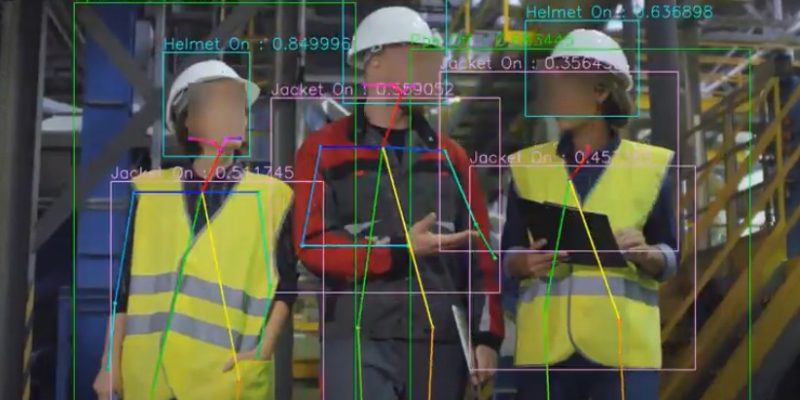
Computer vision systems use AI algorithms trained to recognise specific safety gear—hard hats, high-visibility vests, goggles, gloves, and more. Cameras installed in key operational areas scan the environment continuously, comparing worker appearances against safety protocols.
When a violation is detected, the system can:
- Trigger an instant alert to a site supervisor
- Log the incident with time and location stamps
- Compile reports over time to identify repeat patterns or hotspots
- Provide anonymised insights to inform coaching or policy updates
Unlike manual checks, which may occur once per day or week, AI systems operate 24/7, without fatigue or bias. This creates a more consistent and equitable approach to PPE monitoring across shifts, roles, and facilities.
Case Example: Logistics and Warehousing
In a large logistics centre, different areas may require different PPE—steel-toe boots in loading zones, gloves in packing areas, or masks in food handling departments. Traditionally, enforcing this would require multiple supervisors constantly moving across the facility.
By installing AI-powered cameras at access points and key workstations, the company can now detect whether workers are wearing the right equipment based on their zone. If someone enters a restricted area without proper gear, an alert is sent automatically. Over time, compliance rates improve, and the need for manual enforcement decreases.
Benefits of Automated PPE Monitoring
The move toward AI-powered systems for PPE compliance isn’t just about convenience—it delivers measurable safety and operational benefits:
- Faster intervention: Issues are addressed before they escalate into accidents.
- Better data: Organisations gain insight into trends by location, department, or time of day.
- Reduced supervision burden: Safety managers can focus on strategic initiatives rather than constant enforcement.
- Increased accountability: Transparent data fosters individual and team responsibility.
- Improved compliance culture: When everyone knows the system is active, adherence improves organically.
It also helps demonstrate proactive risk management to auditors, insurers, and regulatory bodies—reducing exposure and supporting ESG initiatives.
Privacy and Ethical Considerations
As with any workplace monitoring, transparency is key. The most effective AI implementations are those that prioritise privacy while promoting safety. Modern PPE detection platforms are designed to focus on compliance indicators, not identity.
Data can be anonymised, and footage can be processed locally to reduce data handling risks. The goal is prevention—not surveillance. When introduced as part of a broader safety strategy, AI becomes a partner, not a policeman.
Choosing the Right System
For businesses evaluating AI-powered PPE detection tools, key considerations should include:
- Compatibility with existing CCTV or infrastructure
- Accuracy across varying lighting, angles, and PPE styles
- Customisability based on job role, area, or shift type
- Integrations with existing EHS or HR systems
- Clear reporting dashboards with actionable insights
- Strong privacy controls and data security
Look for vendors with proven experience in industrial environments and a commitment to continuous AI model improvement as new PPE styles or regulations emerge.
AI as a Foundation for Smarter Safety
PPE detection is just one example of how AI is transforming safety from a reactive system to a predictive one. Once deployed, the same computer vision infrastructure can often support other safety use cases—like detecting unsafe behaviours, ergonomic risks, or access violations.
For many organisations, this makes AI an investment not only in PPE compliance, but in a smarter, more responsive safety ecosystem overall.
Explore PPE Detection Technology
To learn more about how AI can help your business reduce risk and improve compliance, explore the latest AI-powered systems for PPE compliance. As workplace safety expectations rise, automation is no longer a nice-to-have—it’s an essential layer of protection for your people, your reputation, and your bottom line.
The ROI of PPE Compliance Automation
One of the less discussed benefits of AI-powered PPE detection is the return on investment (ROI) it delivers. While initial setup may include integration costs and training, organisations quickly recover these through reduced incident rates, lower insurance premiums, and time saved on manual checks. Moreover, reliable compliance data helps justify broader investments in EHS technologies, making AI a catalyst for wider operational improvement.
Some companies also leverage PPE detection data to refine shift schedules or facility layout. For instance, if non-compliance spikes at certain entry points or times of day, safety managers can adjust staffing or training to compensate—creating a continuous loop of optimisation driven by real-time insights.
Industry Adoption and Future Outlook
Across sectors—from manufacturing and mining to food production and logistics—AI is quickly becoming the gold standard for compliance monitoring. As regulations grow stricter and operational complexity increases, scalable solutions like PPE detection offer a sustainable path forward. Industry leaders are already embedding AI into their safety strategies not just for today’s risks, but to future-proof their operations in a world where expectations for health and safety continue to rise.
Ultimately, AI’s role in PPE compliance represents a broader shift in mindset—from reactive enforcement to continuous improvement. It enables businesses to protect their most valuable asset: their people.





Comments